Canada Post has confirmed that 620,000 more addresses will lose door-to-door delivery by 2027, shifting nearly half a million households onto community mailboxes as part of a sweeping restructuring plan. For anyone who relies on the mail to send contracts, invoices, or personal documents, this is the latest sign that traditional mail is becoming slower, less convenient, and harder to count on. If you have been searching for a reliable Canada Post alternative, you are far from alone.
Quick Summary
- Canada Post will convert 485,000 more addresses across 37 communities to community mailboxes in 2027, on top of 136,000 already announced for late 2026.
- The company posted a record loss of US$1.15 billion in 2025 and has lost money for eight straight years.
- More than two years of strikes and labor disputes already pushed many businesses toward alternative carriers before this announcement.
- Community mailboxes add physical security but introduce new delays and friction for time-sensitive or confidential documents.
- SureSend delivers documents in seconds with server-side encryption and a passphrase-protected, expiring link: no mailbox, no delay.
In This Guide
- What Is Changing at Canada Post?
- Why Is Canada Post Cutting Door-to-Door Delivery?
- How Have Strikes Affected Businesses That Rely on Mail?
- Are Community Mailboxes Safe for Sensitive Documents?
- What If Someone Cannot Reach a Community Mailbox?
- Why Aren’t Mail and Email Good Enough for Sensitive Documents?
- Which Industries Are Most Affected?
- A Faster Canada Post Alternative for Sending Documents
- How Does SureSend Compare to Canada Post and Email?
- Frequently Asked Questions
- Getting Started
What Is Changing at Canada Post?
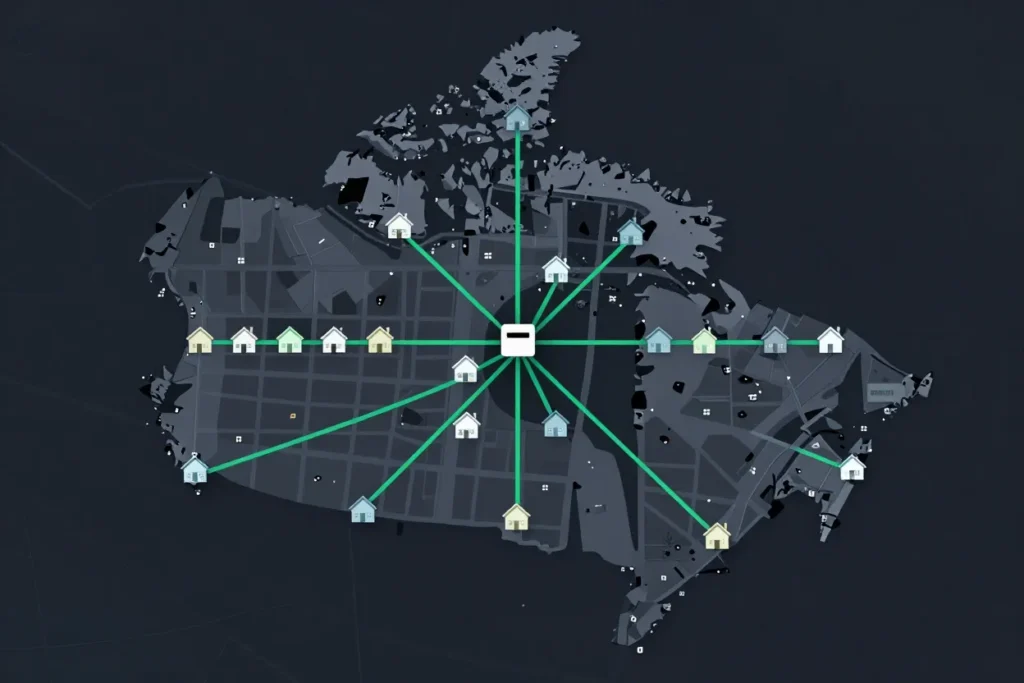
Canada Post announced it will convert 485,000 additional addresses across 37 communities from door-to-door delivery to community mailboxes in 2027. This is on top of the 136,000 addresses already slated for conversion in late 2026. Parts of Halifax, Ontario, and Calgary are among the regions losing home delivery, with notifications rolling out to affected communities over the coming months.
This is not a small adjustment. Canada Post is converting 4 million addresses that still receive door-to-door delivery, a national program expected to take roughly five years. Nearly three-quarters of Canadian addresses already use some form of centralized delivery — community mailboxes, apartment lobby boxes, or post office boxes — and that share is about to grow significantly.
For routine mail, a community mailbox a few blocks away might be a minor inconvenience. For time-sensitive or confidential documents, it is a different story entirely. Canada Post says it is working with local governments in 13 initial communities to finalize mailbox locations, and residents will receive keys before any change takes effect. However, the rollout timeline alone means many households will face a multi-year transition period of uncertainty about exactly how and when their mail service will change.
Why Is Canada Post Cutting Door-to-Door Delivery?
Officials point to the cost of delivering to individual homes as the driving factor behind the change. Canada Post posted a record $1.57 billion loss before tax in 2025, up from $841 million in 2024. Consequently, the organization has now lost money for eight consecutive years. Consolidating delivery to centralized mailboxes is expected to meaningfully reduce operating costs — but the savings come directly at the expense of convenience and delivery speed for the millions of households affected.
This pattern is not unique to Canada. The U.S. Postal Service has faced similar billion-dollar annual losses and is now seeking regulatory independence to set its own prices and scale back service in areas where delivery is no longer economical. Postal services worldwide are reimagining their business models in response to declining mail volume and competition from leaner, more flexible carriers — a clear signal that the slow, centralized mail of the past is not coming back. In fact, this global trend suggests that whatever changes Canada Post implements now are unlikely to be the last.
How Have Strikes Affected Businesses That Rely on Mail?
Labour disruptions pushed many businesses to other carriers before the delivery cuts were even announced. Earlier this year, more than 50,000 letter carriers represented by the Canadian Union of Postal Workers ratified a new contract after more than two years of labor uncertainty, including strikes and other job actions that disrupted deliveries nationwide. In fact, that uncertainty already drove many businesses to shift their mail and parcel volumes to alternative carriers well before the latest restructuring was announced.
However, the new contract is not a return to stability — it is what unlocked Canada Post’s ability to move forward with the very cuts described above. In other words, the strikes are over, but the consequences of years of disruption are only beginning to show up in the form of reduced service. Specifically, businesses that experienced missed deadlines, delayed invoices, or lost contracts during the labor disputes have good reason to be cautious about relying on physical mail again, even now that a contract is in place.
Are Community Mailboxes Safe for Sensitive Documents?
For everyday letters, a locked community mailbox is reasonably secure. For contracts, medical records and financial statements, the bigger problems are delay, signatures that still need a trip to the door or post office, and extra handling.
Canada Post frames the shift to community mailboxes as a security improvement, since mail sits under lock and key rather than in an open mailbox at the door. That is a fair point for everyday letters. Specifically, though, the picture changes when the contents are a signed contract, a medical record, a financial statement, or any document containing personal information.
More than 80% of parcels fit into a standard compartment, but anything that does not fit — or requires a signature — still needs a trip to the door or a pickup at a nearby post office. For businesses that need documents delivered reliably and on a predictable timeline, a shared mailbox down the street is rarely an improvement — it is one more point of friction, one more delay, and one more place where a sensitive document sits waiting to be collected by the intended recipient rather than anyone else with a key to the cluster box.
What If Someone Cannot Reach a Community Mailbox?
Residents who are physically limited from accessing a community mailbox are eligible for accommodations such as sliding trays, Braille features, or a more accessible compartment. In some cases, Canada Post may provide weekly home delivery on a seasonal, temporary, or permanent basis. These accommodations are a reasonable response to a real concern, but they also illustrate how much more complicated mail delivery is becoming for the people who can least afford added complexity.
Consequently, anyone managing documents for an elderly parent, a client with mobility limitations, or a household that has historically relied on dependable door-to-door service now has an additional process to navigate — applying for accommodations, waiting for approval, and adjusting routines around a new pickup location. A digital alternative removes that complexity entirely, since the document arrives wherever the recipient already is.
Why Aren’t Mail and Email Good Enough for Sensitive Documents?
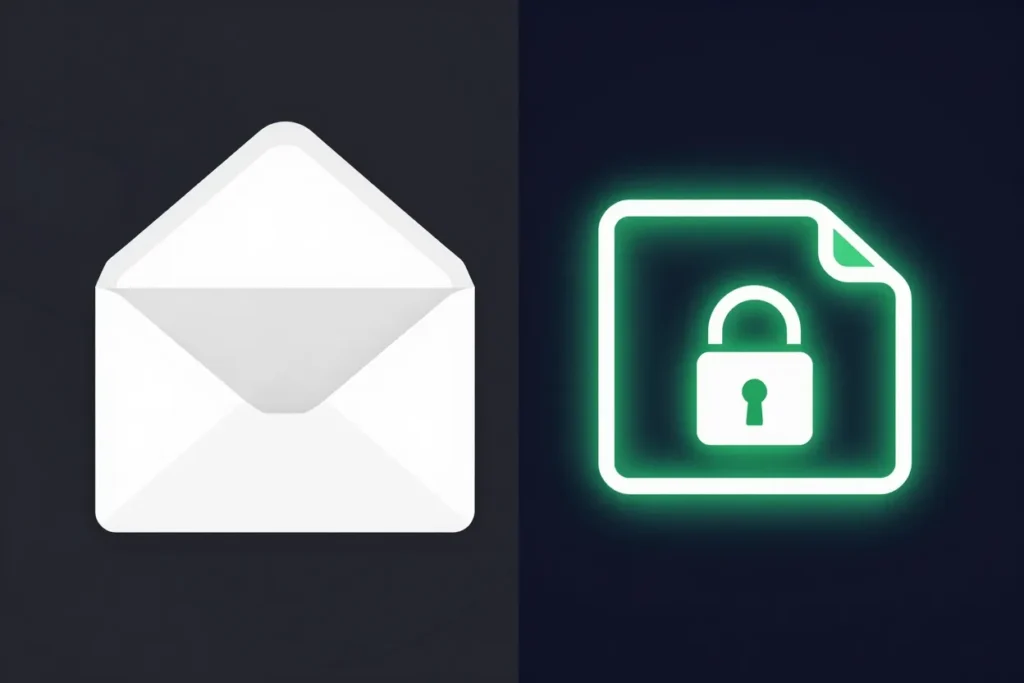
Email is convenient, but it was never designed to be secure, and it was certainly never designed for legal, financial, or healthcare documents that demand confidentiality. Physical mail carries its own well-known risks: lost envelopes, delayed delivery, and now, a shrinking number of addresses that even qualify for delivery to the door.
The real risk lies in treating either option — slow mail or insecure email — as good enough for documents that matter. Whether you are a small business sending client contracts or an individual sharing tax documents with an accountant, the question is the same: why wait days for a community mailbox pickup, or risk an unencrypted inbox, when there is a faster and more secure option available right now?
Which Industries Are Most Affected?
Law firms, accounting firms, real estate brokerages and healthcare providers are the most exposed, because they depend on fast, predictable and secure delivery of signed or confidential documents. Law firms that mail signed agreements to clients, accounting firms that send tax documents during filing season, and real estate brokerages that exchange closing paperwork all depend on predictable, fast, and secure delivery. A delay caused by a community mailbox transition — or a missed delivery during a future labor dispute — can mean a blown deadline with real financial consequences.
Healthcare providers face similar exposure, given the sensitivity of medical records and the strict confidentiality standards that govern them. Additionally, any business that handles personal information under PIPEDA has a compliance interest in knowing exactly how and when a document was delivered — something a locked mailbox several blocks away cannot reliably guarantee. Whether you are running a law firm or a healthcare clinic, the underlying need is the same: certainty that a sensitive file reached the right person, intact and unread by anyone else.
A Faster Canada Post Alternative for Sending Documents
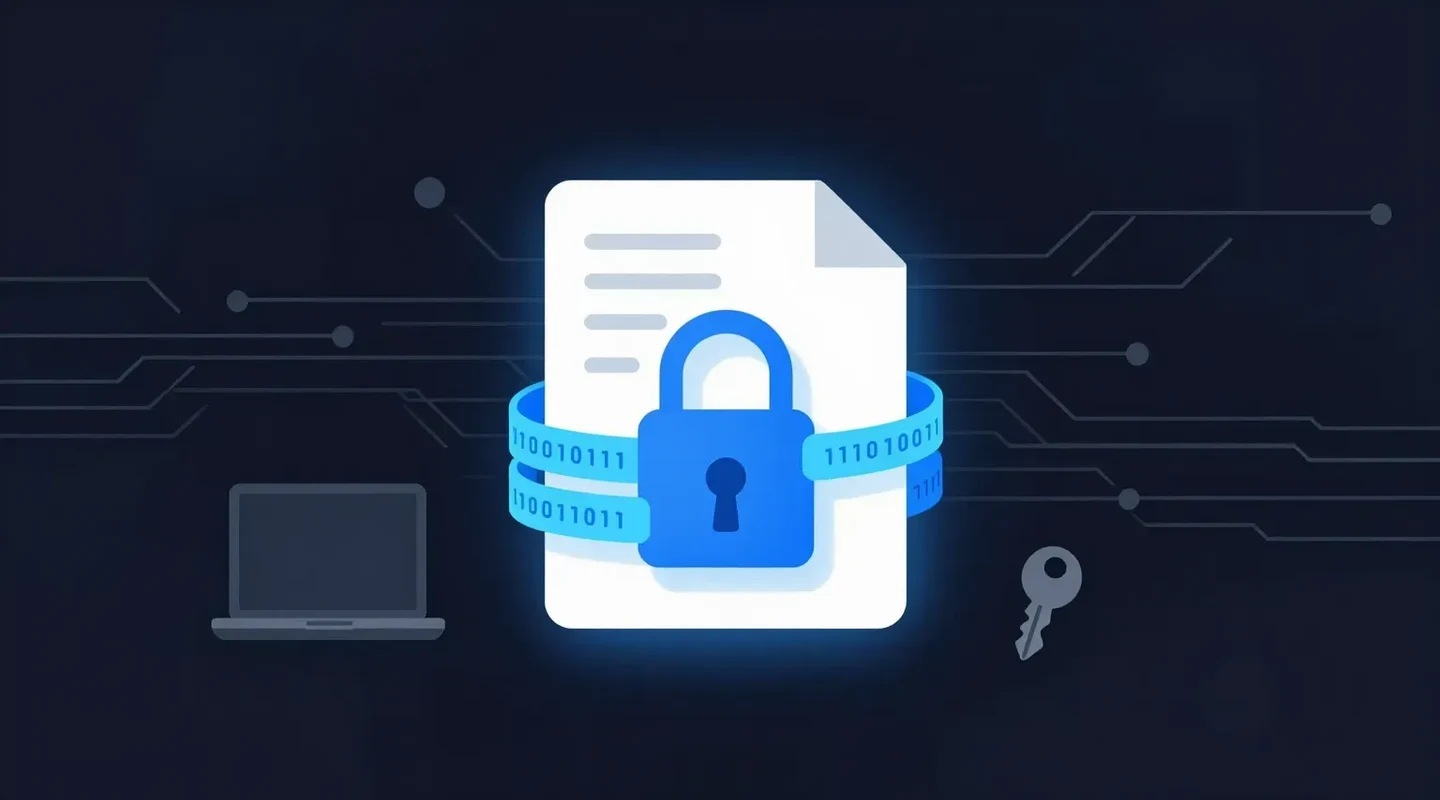
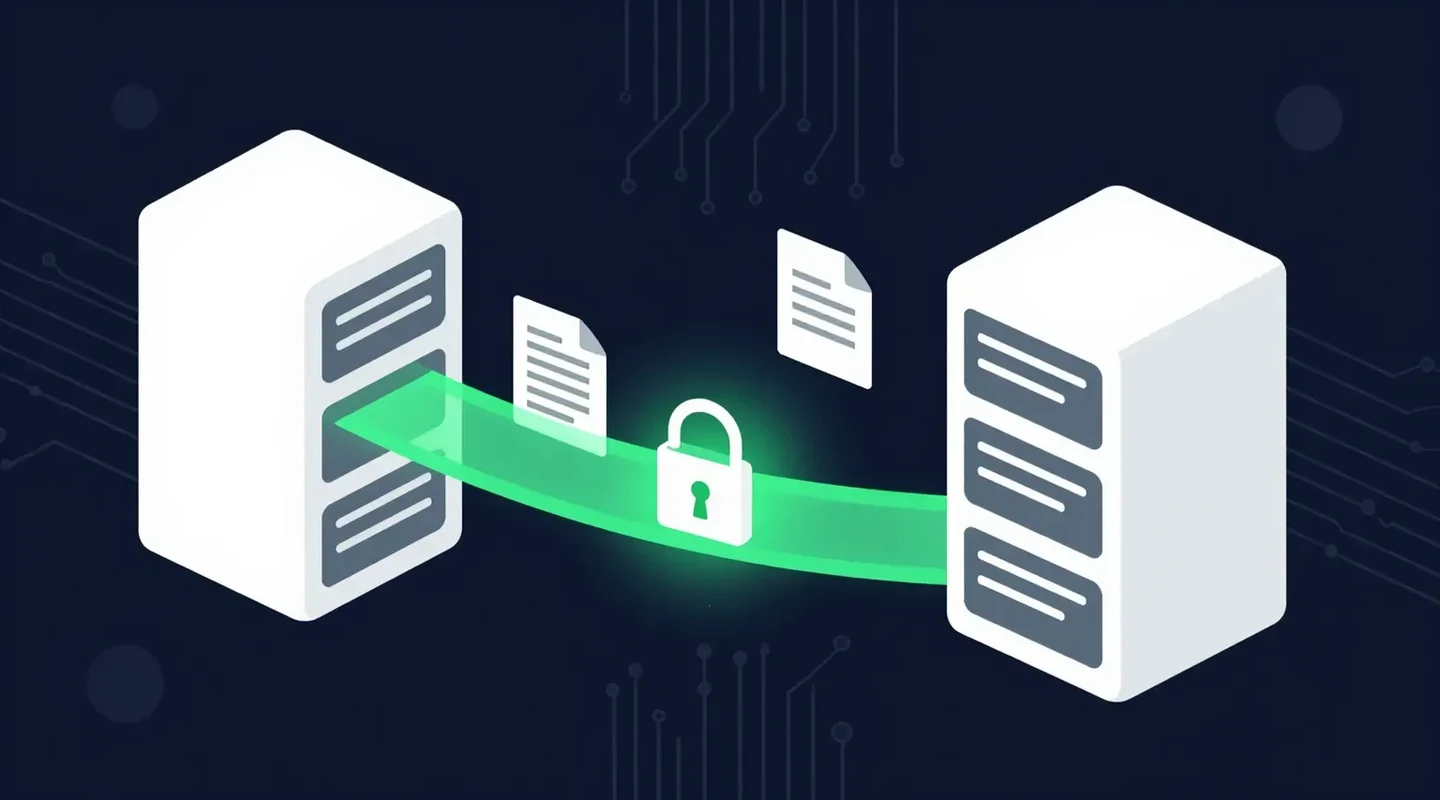
This is where SureSend comes into the picture. SureSend is a Canadian secure file transfer service that sends files through a passphrase-protected link that expires on a date you choose. It works for any document, sensitive or not, and your recipient receives it in seconds rather than days. SureSend uses server-side encryption: files are protected with TLS in transit and AES-256 encryption at rest, with encryption keys managed by SureSend.
You do not need to be technical to use it. If you can send an email, you can SureSend a file. Here is exactly how it works: sign in, add your recipient, upload your file, and set an expiry date and a passphrase. SureSend emails your recipient a secure link, you share the passphrase separately by phone or text, and your dashboard shows the moment the file is retrieved. No community mailbox, no delivery delays, no waiting on a postal contract negotiation to see if your documents arrive on time.
After you send, SureSend reminds you to share the passphrase separately, and your dashboard shows when each transfer is retrieved.
How Does SureSend Compare to Canada Post and Email?
SureSend delivers documents in seconds with server-side encryption, a passphrase and live retrieval status. Canada Post takes days and offers limited tracking, and standard email is instant but usually unencrypted and easy to misdirect.
| Canada Post (Mail) | Standard Email | SureSend | |
|---|---|---|---|
| Delivery time | Days, longer with mailbox conversion | Instant | Seconds |
| Security | Physical lock, no encryption | Typically unencrypted in transit and storage | Server-side encryption: TLS in transit, AES-256 at rest, passphrase-protected link |
| Tracking | Limited, varies by service | Read receipts only, unreliable | Live status: see the moment files are retrieved |
| Accessibility | Requires trip to mailbox or post office | Sent and received entirely online | Sent and received entirely online |
| Reliability risk | Subject to strikes, restructuring, delays | Subject to phishing, interception, account compromise | On-demand, encrypted delivery with expiring links |
| Best for | Physical mail, packages | Casual, non-sensitive correspondence | Contracts, records, financial and legal documents |
Canada Post still has a role to play for physical goods and traditional mail. However, for anything that can be sent digitally — and that includes the vast majority of contracts, statements, and records exchanged between businesses and clients — a seamless way to protect what matters already exists, and it does not depend on a community mailbox location near you.
Why SureSend Beats the Mailbox
SureSend uses server-side encryption: TLS in transit and AES-256 encryption at rest, with keys managed by SureSend. Send up to 2 GB per transfer, protect it with a passphrase you share separately, set an expiry date, and see when it is retrieved. Your recipient needs no account. New subscribers get 30 days of Pro free, with no credit card required. Start sending securely for free.
Frequently Asked Questions
Is my address affected by the Canada Post changes?
Canada Post has named Halifax, Ontario, and Calgary as among the regions affected so far, with 37 communities included in the 2027 phase. Canada Post says it will contact affected residents directly as mailbox locations are finalized.
Can I still mail a package after the switch to community mailboxes?
Yes. More than 80% of parcels fit into a standard or dedicated parcel compartment. Larger parcels or those requiring a signature are delivered to the door or held for pickup at a nearby post office.
Is SureSend only for sensitive documents?
No. SureSend works for any file — sensitive or not. The answer depends entirely on what you are sending and who needs to receive it, but the same encrypted, instant delivery applies either way.
Do I need special software to use SureSend?
No. SureSend works directly in your browser. If you can send an email, you can SureSend a file.
How does SureSend protect my documents?
SureSend uses server-side encryption: files are protected with TLS in transit and AES-256 encryption at rest, with encryption keys managed by SureSend. Each transfer is protected by a passphrase you share separately, expires on a date you choose, and can be cancelled before it is downloaded.
Getting Started
As Canada Post moves forward with its five-year restructuring plan, the gap between traditional mail and digital document delivery will only widen. No couriers, no delays, no risk of a document sitting in a locked box waiting to be picked up. For true peace of mind, look no further than a Canada Post alternative built from the ground up to keep your files private and your delivery instant.
Learn more about how SureSend works or explore pricing to find the plan that fits your needs.
Have questions about switching from traditional mail to secure digital delivery? Visit our resources page for more guides on protecting your documents.